Scaling Product Ops: A Guide to Standardization & Efficiency
Learn how to scale your Product Operations function from a part-time effort to a center of excellence. A practical guide for PMs and product leaders.

Product Leader Academy
PM Education
Is your product organization feeling the growing pains? Are your product managers spending more time wrestling with Jira configurations and chasing down data than they are talking to customers? Is every product launch a heroic, last-minute scramble instead of a well-oiled process?
If you're nodding along, you're not alone. As product teams grow, the informal processes that worked for a team of five begin to break down under the weight of ten, twenty, or fifty. The result is often chaos: inconsistent data, duplicated effort, and a frustrating lack of visibility.
This is where Product Operations (ProdOps) transforms from a 'nice-to-have' into a strategic necessity. It’s the central nervous system that enables your entire product organization to run smoothly, efficiently, and effectively. In this guide, we'll walk you through why you need ProdOps, how to spot the signs that it's time to invest, and provide a practical, phased approach to scaling the function for maximum impact.
What is Product Operations, Really? (And What It Isn't)
At its core, Product Operations is an enabling function. Its mission is to make the product management team more efficient and impactful by providing them with the data, tools, and processes they need to succeed. It removes operational friction so PMs can focus on what they do best: building products that customers love.
Think of it this way: if your product managers are the chefs creating the meals, Product Operations is the team that designs the kitchen, sources the best ingredients, and keeps the equipment in perfect working order.
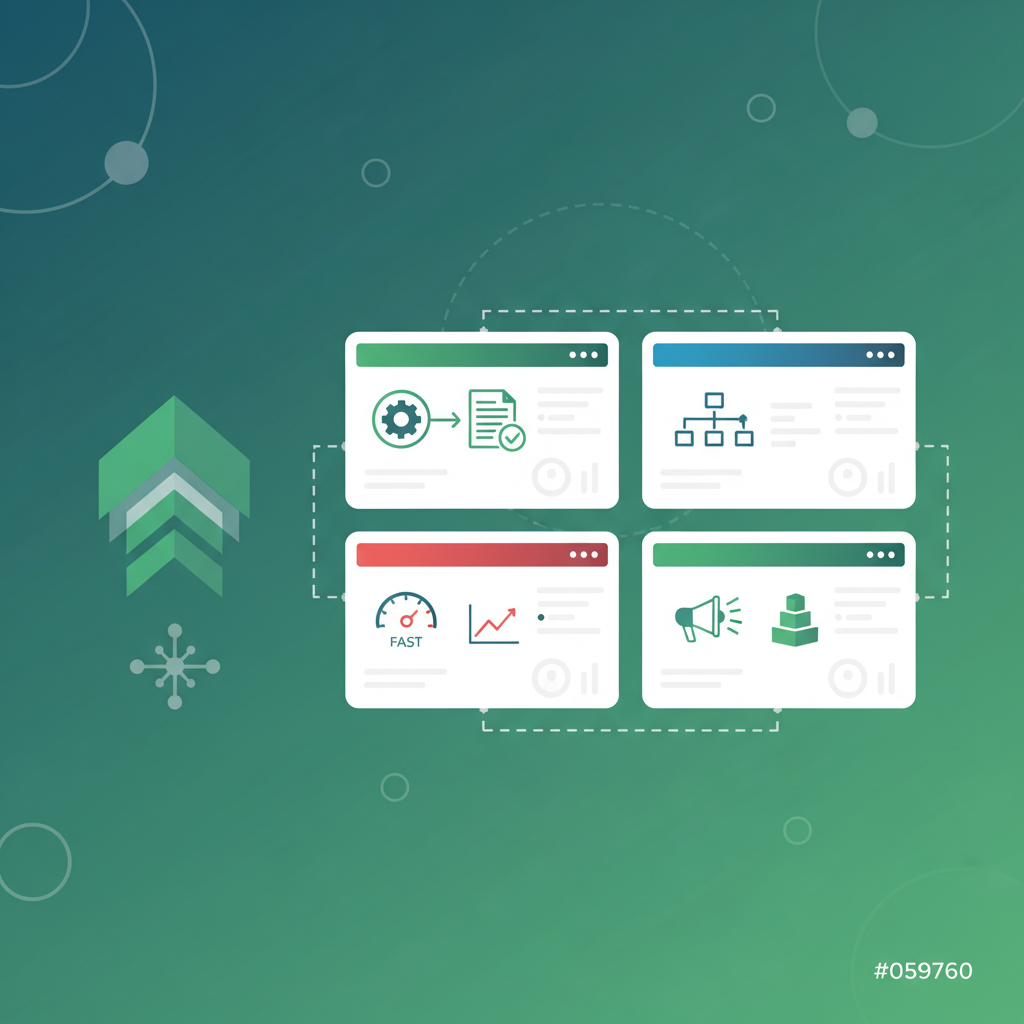
ProdOps typically stands on four key pillars:
- Data & Insights: Centralizing access to both quantitative (e.g., product analytics, A/B test results) and qualitative (e.g., user feedback, NPS scores, sales call notes) data. This pillar ensures everyone is working from a single source of truth.
- Tools & Systems: Managing and optimizing the product tech stack. This includes tools for roadmapping (Aha!, Productboard), analytics (Amplitude, Mixpanel), project management (Jira), and user feedback (Pendo, Dovetail).
- Processes & Governance: Creating and maintaining standardized, scalable workflows. This covers everything from the quarterly planning cadence and prioritization frameworks to launch readiness checklists and feedback-to-feature pipelines.
- Strategy & Alignment: Facilitating communication and ensuring alignment across the product team and with cross-functional partners like engineering, marketing, sales, and support. This includes managing strategic planning cycles and creating consistent communication templates.
It's equally important to understand what ProdOps isn't. It is not a team of project managers for product. It doesn't own the product strategy or roadmap—that remains the PM's responsibility. ProdOps is a strategic partner and enabler, not a replacement for core product management duties.
The Telltale Signs: When Do You Need to Scale Product Ops?
How do you know it's time to move beyond ad-hoc operational fixes and formally invest in ProdOps? Look for these common symptoms of operational debt:
- PMs are bogged down: Your product managers report spending more than 25% of their time on administrative tasks, tool configuration, or manual data pulling.
- Inconsistent processes: Each product squad has its own way of roadmapping, prioritizing work, and defining launch criteria. This makes it nearly impossible for leadership to get a consolidated view of the portfolio.
- Data chaos: Different teams use different metrics to measure success, leading to conflicting reports and an inability to make data-informed decisions at a company level. The classic, "Where do I find the data for X?" is a constant question.
- Painful onboarding: It takes months for a new product manager to become fully effective because processes are undocumented and institutional knowledge lives in people's heads.
- The feedback black hole: Valuable insights from Sales, Support, and Customer Success teams are lost in scattered Slack channels, spreadsheets, and email threads, never making their way into the product discovery process.
- Ad-hoc launches: Every product release is a fire drill. There's no standardized checklist, leading to missed steps, last-minute scrambles, and inconsistent communication with customers and internal teams.
If more than a few of these sound familiar, it's a clear signal that the operational cracks are turning into chasms. It's time to get serious about scaling your product operations.
A Phased Approach to Scaling Product Operations
Scaling ProdOps isn't a big-bang project; it's an evolutionary journey that should match the maturity and size of your product organization. Here’s a three-phase approach to guide your investment.
Phase 1: The 'Accidental' ProdOps (The Player-Coach)
- Who: This role is often filled by a senior PM, a Group PM, or a Chief of Staff to the CPO who has a passion for process and efficiency. They take on ProdOps responsibilities part-time, alongside their primary role.
- When: In smaller product teams (e.g., 5-15 PMs) where the pain is felt but doesn't yet justify a full-time hire.
- Focus: Tackling the biggest, most immediate points of friction. The goal is to get quick wins and prove the value of operational investment.
- Actionable Advice:
- Identify the #1 bottleneck: Interview your PMs. Is it the chaotic intake process for new feature requests? The lack of a standard PRD template? Pick one thing.
- Standardize and document: Create a simple template, a checklist, or a documented workflow for that one process. For example, create a standardized Jira epic structure that all teams can adopt.
- Pilot with a friendly team: Don't mandate it for everyone at once. Work with one or two squads to pilot the new process, gather feedback, and iterate.
- Communicate the 'why': Explain how this new process will save everyone time and reduce confusion. Frame it as a benefit, not a burden.
Phase 2: The First Dedicated Hire (The Specialist Generalist)
- Who: Your first full-time Product Operations Manager. This person is typically a generalist with deep experience in one of the core pillars (e.g., a former PM who loves process, or a data analyst who loves product).
- When: When the 'Player-Coach' can no longer keep up, and the operational debt is visibly slowing down a growing product team (e.g., 15-40 PMs).
- Focus: Building the foundational systems and processes that will allow the organization to scale effectively. This is about moving from reactive fire-fighting to proactive system-building.
- Actionable Advice:
- Conduct an internal audit: The first 90 days should be dedicated to discovery. The new hire should interview PMs, designers, engineering leads, and cross-functional partners to map existing workflows and identify all major pain points.
- Create a ProdOps roadmap: Treat ProdOps like a product. Based on the audit, create a prioritized roadmap of initiatives. What's the highest-impact problem to solve first? Is it tool consolidation, a new planning process, or a centralized data dashboard?
- Own the product tech stack: Consolidate ownership of tools like Jira, Productboard, and Amplitude under this role. This ensures consistency and prevents tool sprawl.
- Example: Atlassian's ProdOps team famously began by focusing on standardizing how product teams used Jira and Confluence. By creating common frameworks, they dramatically improved cross-team visibility and collaboration across their vast product portfolio.
Phase 3: The Dedicated Team (The Center of Excellence)
- Who: A dedicated team of ProdOps specialists, often led by a Director of Product Operations.
- When: In large, complex product organizations (e.g., 50+ PMs) where a single person is a bottleneck. The scale of the organization requires specialized expertise.
- Focus: Providing specialized services and driving strategic initiatives. The team becomes a true center of excellence that elevates the entire product function.
- Actionable Advice:
- Structure for scale: Organize the team around key functions. You might have a specialist for Data & Analytics, another for Tools & Systems, and a third focused on Enablement & Process (e.g., onboarding, training).
- Develop a 'service catalog': Clearly define what ProdOps offers to the product team. This could include 'Quarterly Planning Facilitation,' 'New PM Onboarding Program,' 'A/B Test Analysis Support,' or 'Competitive Intelligence Briefings.'
- Measure your own impact: Define success metrics for the ProdOps team itself. This could include:
- PM Satisfaction (eNPS): How happy are PMs with the support they receive?
- Time to Productivity for New PMs: How quickly can a new hire start shipping value?
- Process Adherence: What percentage of teams are using the standardized launch checklist?
- Example: A company like Stripe has a mature Product Operations function that doesn't just manage tools; it plays a critical role in facilitating the strategic planning process, ensuring that hundreds of PMs are aligned and working towards the company's most important goals.
Practical Strategies for Standardization and Efficiency
Regardless of which phase you're in, here are some concrete strategies you can implement to drive standardization and efficiency.
Standardize Your Tooling, Not Your Thinking
The goal is to provide a common language and workflow, not to stifle creativity. A standardized toolset reduces cognitive overhead and makes cross-team collaboration seamless.
- Action: Create standardized Jira project configurations and workflow templates. Build out a library of pre-built dashboards in your analytics tool (e.g., Amplitude, Mixpanel) to answer the top 80% of product questions. Provide a common roadmap template in Aha! or Productboard.
Build a 'Paved Road' for Key Processes
For your most critical and repeatable workflows, create a well-documented, easy-to-follow 'paved road.' This doesn't mean it's the only road, but it should be the path of least resistance for 90% of cases.
- Action:
- Product Discovery: Create a standard Opportunity Canvas or 1-pager template that forces clear thinking about the problem, the customer, and the hypothesis.
- Prioritization: Introduce a recommended prioritization framework (e.g., RICE, WSJF) and a standardized way to capture the scores in your roadmapping tool.
- Launch Readiness: Develop a comprehensive, cross-functional 'Go/No-Go' checklist that covers product, engineering, marketing, support, and legal requirements.
Democratize Data & Insights
Don't let data be the exclusive domain of analysts. Empower your product managers to be self-sufficient by making data accessible, understandable, and trustworthy.
- Action: Create self-serve dashboards for key product health metrics. Establish a central, searchable repository for all user research findings using a tool like Dovetail. Run regular 'data office hours' where PMs can get help with their analytics questions.
Invest in Enablement and Training
A process is useless if nobody knows it exists or understands how to use it. Documentation alone is not enough; you need active enablement.
- Action: Develop a comprehensive onboarding program for new PMs that covers your team's specific tools, processes, and cultural norms. Create a living 'Product Playbook' in your company wiki (e.g., Confluence, Notion) that serves as the single source of truth for 'how we build product here.'
Conclusion: From Chaos to Cohesion
Scaling a product organization is inherently challenging. The complexity grows exponentially, and without deliberate intervention, chaos will win. Product Operations is that deliberate intervention. It's the strategic investment that brings order, clarity, and leverage to your most valuable resource: your product team.
By starting small, proving value, and scaling the function in phases, you can transform your product organization from a collection of siloed, overworked individuals into a cohesive, efficient, and high-impact team. Your PMs will be happier, your stakeholders will be more aligned, and you'll be able to ship better products, faster.
So, ask yourself: where is the biggest point of friction in your product organization today? Start there. That's your first step toward building a world-class Product Operations function.